Epiphora is undrained tears. Those small coloured marks can have different causes, which is why simply cleaning or trying to lighten them does not always address the problem.
Clean eyes and happy Poodles: Nives's story and how we manage tear staining
Anyone who welcomes a Poodle into their life soon falls in love with its expressive, intelligent gaze. Yet almost every owner—especially of a white or light-coloured dog—will eventually encounter a small nuisance: those unsightly brownish or reddish streaks beneath the eyes. The technical term is epiphora, but for us it simply means "eyes that water too much". Today, we would like to shed some light on this subject from the heart of people who live with them every day, sharing our experience at the kennels with our sweet Nives.
Nives's story: a warning sign we did not ignore
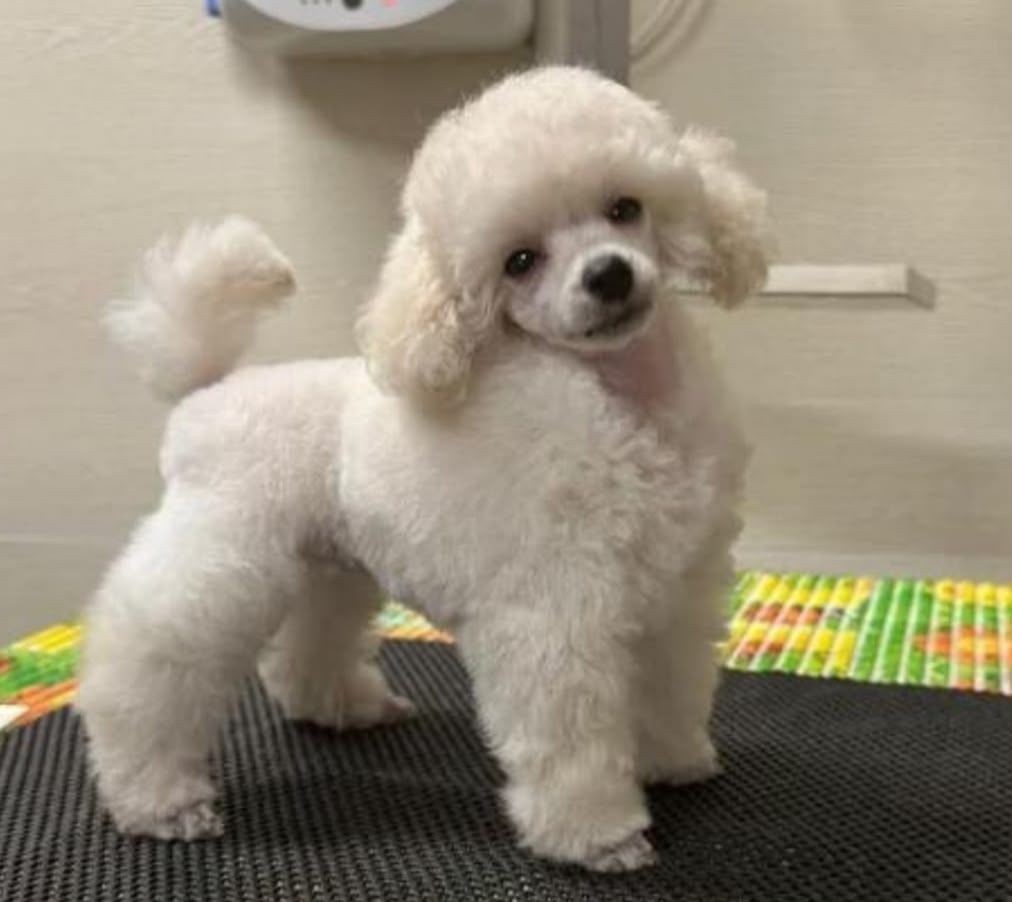
Nives is a white Miniature Poodle puppy, a little cloud of fur born right here with us. From the outset, she showed a lovely temperament and robust health, but at around four months old we noticed that her little eyes were producing too many tears. In a very short time, her snowy-white muzzle began to develop deep brown stains.
Nives often rubbed her muzzle against her paws and sought shade during the brightest hours. She was uncomfortable. Rather than turning to supposedly miraculous whitening products—which often mask the problem without resolving it and may irritate the skin—we did what we always advise those who adopt one of our puppies to do: we consulted our vet to get to the root of the problem.
Why can a Poodle's eyes water so much?
The Poodle has a wonderful skull shape, but its slightly prominent eyes make it somewhat sensitive. There can be several causes of excessive tearing, and it is important to understand them
How to recognise them:
-Changing teeth:
Between 4 and 7 months, puppies lose their milk teeth. Inflammation of the gums stimulates the trigeminal nerve, which increases tear production as a reflex. This was exactly what happened with our Nives!
-Blocked or narrow tear ducts: Tears should drain naturally towards the nose through tiny ducts. As a puppy grows, these ducts may temporarily narrow or become blocked with dust.
-Stray hairs and dust: A small tuft growing in the wrong direction and rubbing against the cornea, wind, or dust picked up while running in the garden can irritate the eye.
-An unsuitable diet: This is one of the most common causes in adults. If food contains too many additives, preservatives or poor-quality proteins, toxins accumulate in the body. The tears then become rich in porphyrins (iron-containing waste substances), which oxidise on contact with the air and stain the coat its characteristic rusty colour.
To help Nives, we adopted a simple, natural but rigorous approach that we follow regularly here at the kennels:
The BARF diet: For us, nutrition is the foundation of health. We have long chosen to wean and feed our dogs on a BARF diet (biologically appropriate raw food). For Nives, we devised a plan based on selected fresh meat, meaty bones and organs, completely removing all starches and grains. Such a clean diet greatly reduces general inflammation in the body and, as a result, the tears are no longer "acidic" and laden with waste products.
Gentle daily cleaning
We cleaned the eye area twice a day using sterile gauze soaked in warm water and chamomile, or colloidal silver.
The key? Drying the area thoroughly after cleaning. Damp fur provides an ideal environment for fungi and bacteria, which deepen the staining and cause an unpleasant smell.
Careful grooming
We carefully trimmed the hairs near the inner corner of the eye to prevent continued friction from stimulating tear production.
A happy outcome: a bright muzzle once again
The combination of teething coming to an end, consistent cleaning and the nutritional benefits of the BARF diet brought about a change. Within a few weeks, Nives's tear production returned to normal levels. The brownish fur was gradually trimmed away as new fur grew, and today Nives once again has a white, healthy muzzle and, most importantly, is free from any discomfort.
Seeing our dogs well is our greatest joy. Managing tear staining simply requires a little patience, consistency and suitable dietary choices. No chemical shortcuts, just plenty of love and nature!